
Meet FSOAS '17 Winning Composer Juliana Hall
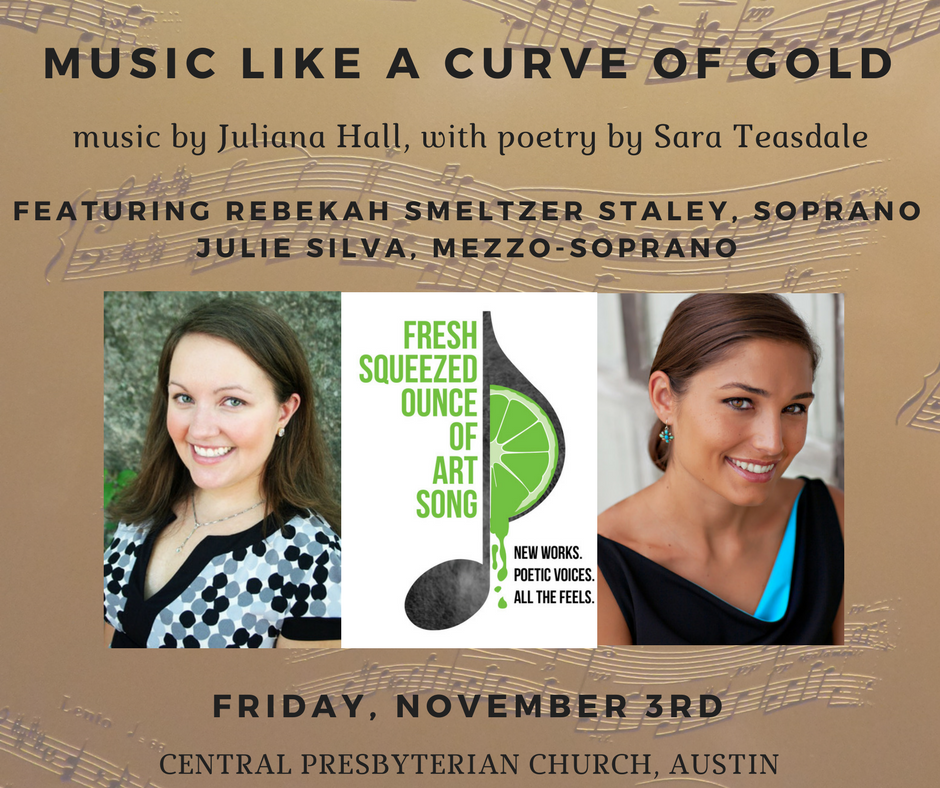
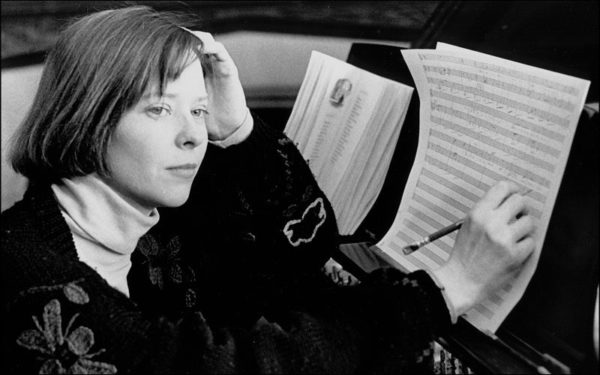
One Ounce Opera is humbled to introduce you to Juliana Hall, whose work has been performed and commissioned by some of classical music's greatest voices. We can't wait to share Juliana's duet, Music Like a Curve of Gold, on Friday, November 3rd.
The duet is a setting of Sara Teasdale's poetry. OOO Soprano Rebekah Smeltzer Staley and Mezzo-soprano Julie Silva -- who will perform the piece at Fresh Squeezed Ounce of Art Song -- had these questions for Ms. Hall:
 Rebekah: In looking through your bio & other interviews, it seems you had an early interest in composition, but you didn’t pursue it as a career/education option until you were working on your Masters. What finally convinced you to pursue composition?
Juliana Hall: Having grown up in a village of 3000 people in the southern Ohio countryside, composers were - literally - the stuff of history books. I had begun piano lessons when I was six years old, with my mother, and before officially becoming a composer had studied piano very intensely for 20 years...I enjoyed playing, and just really had no sense of what a life in composition might mean in practical terms. People in history books were composers, not "us."
Despite enjoying piano, though, it never felt completely natural to me, so when I finally began taking composition lessons in graduate school at Yale, I had a sensation for the first time in my life that I had actually found an activity that felt natural, and it seemed to me that I had found a home of sorts. My teachers - Martin Bresnick, Leon Kirchner, and Frederic Rzewski - all encouraged me (and very strongly too) to change my major to composition. Perhaps without their support, I might never have become a composer...but the combination of experiencing an activity that just felt "right" at the same time that such established composers were showing me such encouragement was enough to allow me to take that leap of faith, and so my Master's degree was in composition, and not piano.
After Yale, I completed my studies with Dominick Argento. Dominick was incredibly supportive of my work, and has been for the past 30 years. He really gave me a sense of some of the practicalities I would face, were I to pursue a life of composing...not always easy realities, he didn't sugar coat the difficulties inherent in this profession. In spite of those difficulties, his support added to that of my previous teachers, and I was able to leave school with a sense that I had found my place in the world and, come what may, I would be able to create songs that helped me to express the wonderful beauty and truths the great poets open to us.
Rebekah: Why write Music Like a Curve of Gold as a duet? (Also, if the piece was a commission, did you choose the texts, or did the commissioners?)
Juliana Hall: Several years ago, the vocal duo Feminine Musique (comprised of soprano Korliss Uecker and mezzo soprano Tammy Hensrud) commissioned me for a piece, as they specialize in art song by women composers. At the time I had an idea for a very large setting of Elizabeth Bishop's poem "Roosters," which I wrote for them (and which they will be premiering on January 19, 2018 at the Hartt School of Music). However, "Roosters" is 20 minutes in length, and due to programming considerations imposed on them by presenters, they also wanted a short work that could more easily fit into shorter programs.
"Music like a Curve of Gold" was the short work, then, that resulted from their request. My husband is a cellist, and he helps me in many aspects of my career...so it was actually my husband (who has an excellent sense of how various texts go together) that chose the two poems by Sara Teasdale. I love the two poems: very lyrical and the sentiments expressed are things I believe in. They speak to the human need to feel we have lived a life worth living, that we are grateful, and that we sought goodness and beauty...and I think a vocal duo provides the perfect balance of richness reflective of the texts, while being just spare enough not to lapse into sentimentality.
Julie S: What inspired you to set Sara Teasdale's texts? What was it about her words and/or her life that drew you in?
Juliana Hall: In most cases, I am not concerned with a poet's life when putting together a new piece. Of course, if I'm setting letters I might have an interest in knowing a bit more, or if - as in the case of a recent cycle of mine written on excerpts from Anne Frank's diary - there is an intrinsic connection between the texts and the person's character or life events that is stronger than usual, then I'll naturally take his or her life into account. For the most part, however, it is the text itself that I work with - just a few words in isolation, so that I can hear them "speaking" to me...and the message they convey to me becomes what I wish to convey to an audience.
In my days as a younger composer, I'd decide beforehand that I might want to write about night, or about Heaven, or about music...and then I'd find poems to fit into a cycle that worked well together...but these days when planning a new composition, I don't usually choose a topic up front, but begin by reading - a lot! I own over 200 books of poetry, and while I don't go through all of them word for word, I do a quick scan to see whether there are any poets that catch my eye, or any particular poems,or any particular topics...and my husband, who is a cellist and who is really good at putting together texts, joins me...it's a wonderful creative activity we do together, seeking a cycle that "works." It was actually my husband who found the two poems of "Music like a Curve of Gold" and since he knows great poetry, and he knows the type of poetry I tend to enjoy setting, what he found was perfect.
I enjoy very lyrical poetry, very clean and unsentimental poetry. The topics of these two poems are things I believe in very strongly...the value of beauty, and of seeing magic in the ordinary...of wanting to feel things deeply, and of wanting to fully appreciate the gifts of life and love, and all the beauty of the world around us, and the truths which flow from all of these. In these two poems, Sara Teasdale distills these ideas into pure and concise language that is full of gentle musical rhythm and vivid imagery, so they were inspiring texts to depict in musical form.
Julie S.: What is the story behind the process of this particular composition? Where do you like to do your composing, and how long does a project like this take to complete?
Juliana Hall: We live in a small, and relatively sleepy, little New England town...there's not a lot to do, and that is perfect for a composer who wants to produce! Our house is quite small, but it rises three floors, and my studio is on the third floor and has a large bay window so I can watch the birds come and go, and enjoy the trees all around.
Having studied for 20 years to become a professional pianist before I switched my focus to composition, I do my composing at the piano through improvisation. After studying the words, making sure I have a complete sense of each word's meaning and repeating the texts out loud over and over, in order to internalize the rhythm of the text, I begin by playing and singing - both at once - seeking sounds to create a meaningful sound world reflective of the text, and also seeking a vocal line that conveys the text in a way that can, hopefully, be understood without the aid of any printed matter...and in the case of "Music like a Curve of Gold" there are two vocal lines that must work together.
Composition has a number of stages. Even when I can write a song in a day, that song may very well take a full week to become final and ready to sing. Sketching out a song can take anywhere from a day to a week, depending on the size of the text...and then that pencil sketch must be input into the computer, which can take a few hours to a few days (if it's a sizable piece). Then I edit - that is, I add dynamics, expression marks like hairpins, tempos, and the like, that layer "on top of" the notes themselves. This can also take a few days or even weeks for a large cycle. Proofreading and "tweaking" follow...making sure I've correctly input notes and correctly assigned expressions markings...and then allowing myself to improve upon what I've first written, when I see there could be a "better" note here or a more "fluid" vocal line there. Again, days to weeks, depending on size of the composition. Then I give the computer file to my husband, who (since he works in electronic publishing and design) does a beautiful job of laying out the score...once again, days to weeks. After that, both he and I proofread...sometimes making as many as six "round-trips" between us.
"Music like a Curve of Gold" probably took around two months in all...sort of a long time for such a small piece, but it was my first duet piece and presented challenges I'd not encountered before, in order to use the voices in a way that gave each singer some nice lines to sing, but within the texture of a blended sound.
EXPERIENCE Music Like a Curve of Gold on Friday, November 3rd!
___
American art song composer Juliana Hall (b. 1958) is a prolific and highly-regarded composer of vocal music, whose songs have been described as “brilliant” (Washington Post), “beguiling” (Times of London), and “the most genuinely moving music of the afternoon” (Boston Globe). The NATS Journal of Singing wrote that “Hall’s text setting is spot on and exquisite”, and Voix des Arts noted that Hall “perpetuates the American Art Song tradition of Beach, Barber, and Bolcom with music of ingenuity and integrity.”
To learn more about Juliana Hall, including a full biography, please visit her website https://www.julianahall.com/.
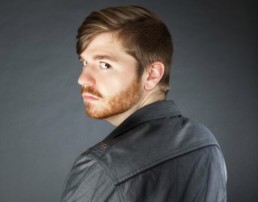
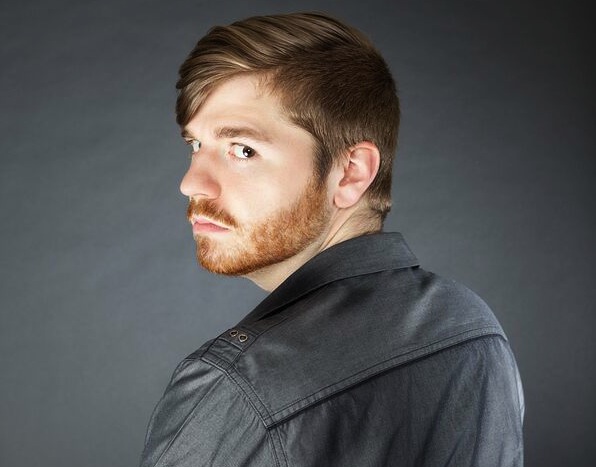
Meet FSOAS '17 Winning Composer Marc Hoffeditz
Meet Composer Marc Hoffeditz, whose winning song Ne'er Part I will be sung by Soprano Elise Leung Kotara at the 2nd Annual Fresh Squeezed Ounce of Art Song on Friday, November 3rd.
The text is adapted from the beloved story of Peter Pan. In answering questions from Elise, Marc shares more insight, including how he hopes the audience will experience the piece.
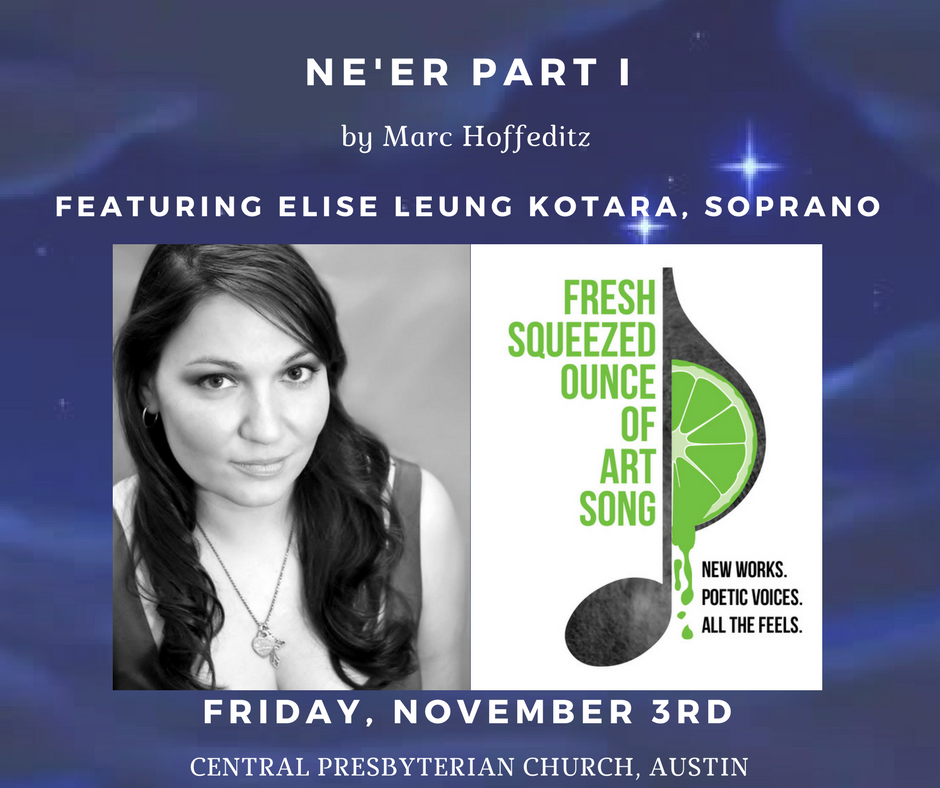 Elise: Peter Pan is a story beloved by adults and children alike. How did you go about preparing the text to be set to music, and what other decisions did you need to make about the text (the time signature, the mood of the piece, different sections of the story…)?
Marc: This text is specifically adapted from the 1911 novel entitled 'Peter and Wendy' (in the public domain-woohoo!), but most people are familiar with the original play (1904, still copyrighted) or the Disney movie. What I love most about this story in particular is that I feel people approach Peter Pan with a cheery mindset, but the original book has a much darker perspective of the action and is framed more from the angle of growing up and the hardships associated with the psychology of aging. 'Two is the end of the beginning' is a line from one of the earlier chapters, referencing the point in which we realize we will not be children forever, and I thought ‘WHAT. THIS IS SO CHILLING. HOW IS THIS A CHILDRENS BOOK’? So I agree, it's definitely a classic for both children and adults, but Barrie's intentions were much deeper than a silly tale about pirates and learning to fly.
A little background on how the piece came to be: It was commissioned by my friend Sarah Hennessey for her senior recital in Boston and she was looking for a piece that described the sensation of being too young to be a grownup, but being too old to be a child. Enter Peter and Wendy! The direction we decided to take was to look at the story from Wendy's perspective and frame it as her, now a mother, looking back at her adventures and reliving certain parts of her youth. A plot beyond retelling the original story was really important to me to solidify why we were revisiting this tale in particular and to help better understand the dramatic construction of the piece. In this case, the beginning, middle, and end are anchors for her role as mother and the portions between reference her transition from child to adult and vice versa.
In terms of preparing the text: I read the whole book, marking different sentences that stuck out or followed the dramatic structure I was looking for. From there, I adapted the remaining fragments into 9 movements (full version), trying to keep as much of the original text as possible instead of trying to paraphrase. Honestly, it took much longer to read, decide on, and adapt the text than it did to write the score, mainly because I was hearing the music as I was working through the story, but I'd never spent so long with the text of a piece before.
In terms of setting the text: My music in general likes to teeter between humor and pathos and I think Part 1 definitely reflects that both textually and formally. As a general rule of construction, I tried to have the more referentially 'child-like' parts of the music written in compound meters and the 'grown up' portions written in simple meters. From there, I wanted to juxtapose the blurriness of identity that Wendy felt by referencing both metrical constructs throughout the piece. This is highlighted in the 2nd movement when mother Wendy sings about her childhood in 6/8 while highlighting two main beats (1 & 4) that suggest it could be a simple meter. In the 3rd movement, Wendy is trying to act like her mother by singing in 2/4, but the appearance of gestural dance interludes that hint to a compound meter interrupt her intentions.
Although this is the first real song cycle I have written with such a strong thematic continuity, I found it important to keep things varied and interesting by trying not to telegraph what might happen next. In the end, the piece is comprised of a bunch of styles and influences, but I think the portions of recitative ground the piece and remind you that you are listening to not just a song cycle, but a very relatable story.
Elise: When did you start composing - and what or who were your early passions and influences?
Marc: I started composing little pieces back in the 6th grade. I didn't really think much of writing music seriously until my senior year, when I wrote a 26 song musical about Abraham and Mary Todd Lincoln called An American Love Story (yes, cheesy as hell). From there, I started studying composition in college and haven't stopped since! (Haven't written another musical though....but maybe that's okay)
I was a big musical theater fan in high school (hence the creation of an egregiously long musical) and I think both Stephen Sondheim and Schwartz were really early influences. The end of Pippin always made me super uncomfortable, yet I couldn’t stop going back to listen and is probably why I like the possibilities of devil’s advocacy in my music. I also remember being 17 or 18 watching Into the Woods and sobbing uncontrollably when ‘Children will listen’ started playing. I think these were really defining musical experiences and a large reason why as to why I like to re-contextualize popular stories and play with a landscape of contrasting emotional experiences
Nowadays, I think my influences include Benjamin Britten, Alban Berg, and an array of styles found in the early 20th century reinterpreted through 21st century ears. I also really respond well to Libby Larsen, Thomas Ades, and George Benjamin. Non-musical influences include anything to do with identity, especially how we formulate it today through our technological word and weird or uncomfortable subjects approached with a sense of universality and pathos.
Elise: Do you have any specific hopes about how people might experience this piece?
Marc: I don't really have any expectations of how people will perceive my works as they are happening, but I think from the performer’s perspective that knowing the larger arc and the beginning-is-the-end aspect should be highlighted. A big reason I love writing vocal music is because I love storytelling and I like to emphasize that to those that perform my works. You are NOT just a singer, you are a story teller! Tell us a story and get us hooked on whatever you are singing! The only way the audience is going to believe what is happening and what they are hearing is if you truly believe it and imbue yourself in it.
JOIN US TO EXPERIENCE ELISE PERFORM MARC'S "Ne'er Part I" on NOV. 3rd!
_____
Marc Hoffeditz is a composer of vocal and instrumental music searching to balance the humors of sarcasm, pathos, camp, and vulnerability. He has made his mark on the indie opera scene with performances by Rhymes with Opera, OperaRox Productions, Hartford Opera Theatre, and Opera from Scratch (Nova Scotia). His song cycle/monodrama Ne’er was chosen for performance at the 2016 Minnesota Source Song Festival, where he worked with acclaimed American composer Libby Larsen. Recent performances include the premiere of There will be no more, a song cycle for tenor and piano with OperaRox Productions in NYC.
To learn more about Marc and his music, visit https://soundcloud.com/marchoffeditz.
One Month FUN-raiser! $2000 Goal
It’s fall, and what a perfect time to announce OOO’s short-and-sweet $2000 one month FUN-raiser! Every cent supports our mission and our singers, and the programming you love. Now through the end of October!
YOUR GIFT IS TAX-DEDUCTIBLE. Here’s how:
- Visit our fiscal sponsor — Austin Creative Alliance — at this link here–> https://www.austincreativealliance.org/donate/SPdonate/#!form/DonateSP
- Scroll down until you see “One Ounce Opera” and click on the ADD button in our box.
- Type in ANY amount and click ADD. You will be directed to ACA’s secure payment screen.
- Follow the directions, and that’s it! You’re done!
A few key ways your donation will be put to use:
- Funding the launch of our Community Programs, providing FREE performances for those who might not otherwise have access — first one is for the beautiful women’s choir at Reagan High School on November 1st, 2017!
- Space rental, both for rehearsals and performances.
- Costumes, props, set pieces, lights, projections, and the many talented folks that design and direct different creative aspects of our productions.
- Administrative support, including website maintenance/rebuild.
- The singers! We love our talented crew, and we know you do, too!
- CREATION and implementation of exciting new programming.
- RECORDINGS! Your gift will allow One Ounce to reach audiences world-wide when we release new professionally-produced video and audio!
Thank you in advance for your generosity. We wouldn’t exist without your support!
2017-18 Fresh Squeezed Ounce Series Competition for Art Song and Opera
CALL FOR SHORT OPERA and ART SONG SUBMISSIONS!
Composers and librettists: We’d like to formally invite you to submit work to our 2017-18 Fresh Squeezed Ounce Series Competition. Winning pieces will be produced and performed by One Ounce Opera in Austin, Texas.
DEADLINE FOR SUBMISSION OF SHORT OPERA and/or ART SONG IS SEPTEMBER 1ST, 2017.
This will be the 3rd annual FSO-Opera, and the 2nd annual FSO-Art Song. These events are part of One Ounce Opera’s “Fresh Squeezed Ounce” series, celebrating new works and contemporary voices. In addition to having their works produced and performed in Austin, One Ounce Opera spotlights each composer/librettist in an informative blog post that includes an informal interview, each work is highlighted in our newsletter and on social media, and each winner receives a live video and audio recording. At each event, composers/librettists who are able to attend will be acknowledged and awarded a certificate (and some swag).
FAQ:
Where can I see the official rules for each competition? Guidelines appear on each entry form. Buttons for each can be found below. Consider your current luck is mostly a chop activity book of ra no deposit bonus 2021. Please review the rules in detail before submitting any work. Works that do not fit within the guidelines will not be considered.
When are the performances? FSO-Art Song is November 3, 2017. FSO-Opera is April 6-8, 2018. Free community performances, which include selections from each program, will be announced at a later date.
 How do I submit my files? On the entry form, you will supply LINKS to an online folder or files. We must be able to download the score and libretto. For accuracy, please convert all text/score files to PDF before sending. Example of what/where to upload and link to: Dropbox folder, Google Drive, YouTube, SoundCloud, other storage methods that can be accessed via link. The required materials are listed on the form(s).
Am I allowed to submit more than one work? YES! As long as each submitted work follows the guidelines of the individual competition (art song v. opera), we welcome multiple entries.
I submitted an art song and an opera. Could they BOTH be chosen? YES! If you, however, submit more than one art song cycle or micro-opera, it is less likely that more than one of each would be chosen to fill the same program.
How will I know if my work was chosen? Winning works will be announced via Facebook and a post on this site, and the winners will be notified shortly thereafter. Copies of all parts and any revisions will be due at that time.
How do I keep up with any new developments in the competition? For the latest details, we strongly suggest following One Ounce Opera on Facebook, and adding yourself to the Facebook event page.
Once again, when exactly is the deadline? The hard-and-fast deadline for entry into either FSO-Art Song or FSO-Opera is 11:59pm on September 1st, 2017. Only complete applications — with all required materials received as requested by the deadline — will be considered.
I have a question not answered here. How do I get in touch? Click here to send us a message about the competition!
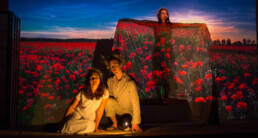
FSOO 2017 Gets Reviewed, and Exclusive Performance Pics!
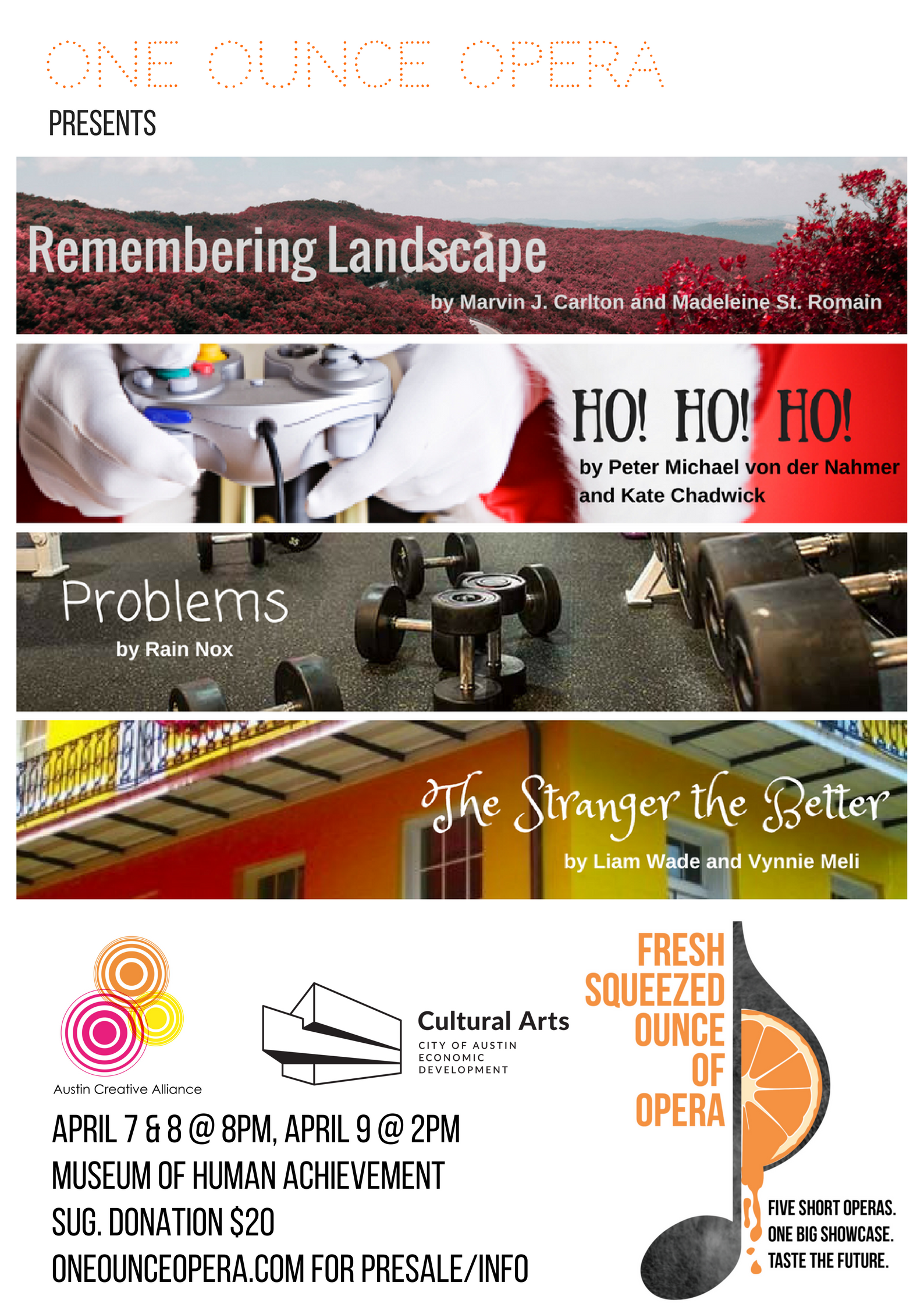
The 2nd Annual Fresh Squeezed Ounce of Opera, which took place April 7-9, 2017, brought together composers from across the US — and Germany! — and the One Ounce Singers you know and love for one BIG, juicy showcase.
We tasted the future of opera, and it was GOOOOOD.
So good, the Austin Chronicle printed an entirely favorable half-page review! Here’s a little snippet:
“…when OOO set out to do this Fresh Squeezed Ounce thing again, we figured it’d be at least as enjoyable a gig as the one in 2016 – and it was….And here’s hoping there will be another one next year.” READ THE ENTIRE REVIEW HERE.
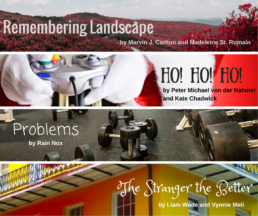
Announcing: Winners of FSOO 2017!
After a national call-for-compositions, One Ounce Opera is proud to announce the Winning Selections for 2017's Fresh Squeezed Ounce of Opera Competition. Composer/librettist spotlight interviews coming soon, and a complete cast and production team list can be found here. Congratulations to this year's winners!
Meet George N. Gianopoulos, Winning Composer of FSOAS 2016
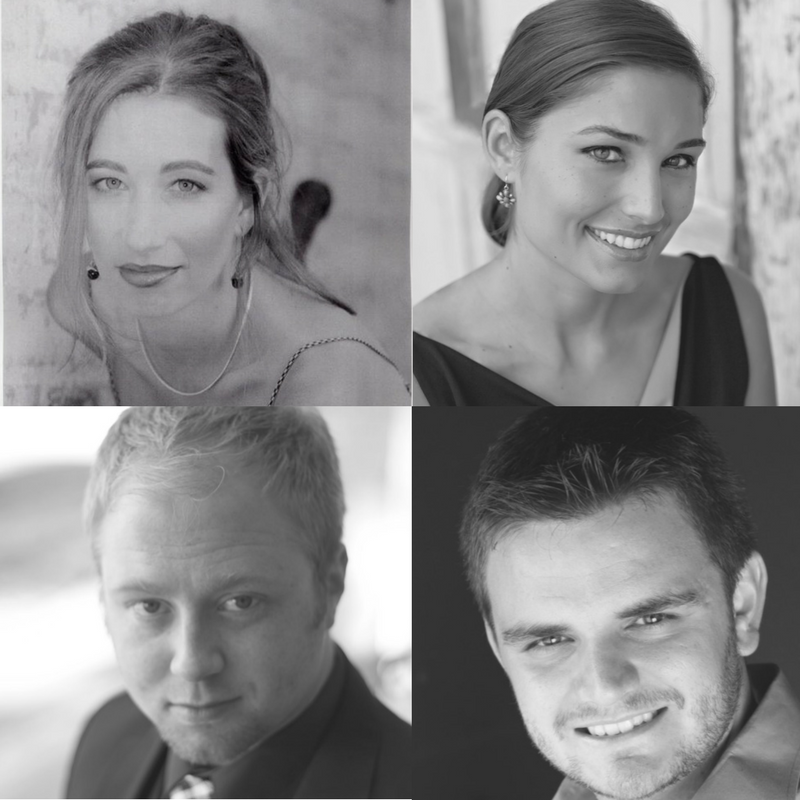
On Friday, November 18th, OOO debuts their new concert series Fresh Squeezed Ounce of Art Song, where Maureen Papovich, Julie Silva, Dalton Flake, and Jake Jacobsen will perform winning composer George N. Gianopoulos‘ cycle “Thirteen Haiku, Op. 27 for Singers and Piano” The singers had these questions:
Julie S.: What inspired you to use Jack Kerouac’s texts and to choose these particular haiku poems from the thousands Kerouac wrote?
George: When my friend Jeremy Frank, a pianist for LA Opera, asked me to write a song cycle for a group he was working with at Wolf Trap, I only had a few weeks to select, set and engrave the text and music, and the short poetic form of haiku had always been interesting to me – and their short! I thought their brevity would allow me to explore something in song that I hadn’t before. While researching the text, I read thousands of haiku from dozens of poets, but there was a feeling of immediacy and relevance to the Kerouac text that drew me in. It was no easy feat narrowing it down from the thousands that exist (all available in a single volume, “Book of Haikus”), but I selected the thirteen that I used by trying image the musical landscape that they might set out – each one feels to be its own contained universe, which made setting them so much easier.
Dalton: How did your thought process work when deciding which voice types to place with certain poems? And how did you decide on the layout of the work (3 songs per voice type, then all together at the end, etc.)?
G: The instrumentation and voice type selection was based on the singers that Mr. Frank had in his group at Wolf Trap. Since it was such a good opportunity for me to work with such talented young singers at such a prestigious venue, I wanted to make the most of it. I also did not want to overwhelm the singers by giving them too much material, since this concert was just one of many they needed to prepare for, the music was delivered on relatively short notice – the ink was still wet! I felt three each would be a fair and balanced amount of material for each singer. I can’t say for certain how I determined which text would go to each voice type, but I imagine that I thought about the timbral qualities of each voice type and matched it with the intensity of the emotional content of the haiku.
Maureen: I’m singing the soprano part in Haiku and in all of my songs and my part in the choral piece, I start “low” and end “high” – around a high a or b. I find this interesting — could you speak to that?
G: Good question, though, I’m not sure I have a good enough answer. I try to approach the text in a way that I feel meets its emotionally intensity, so phrases like “The dream of change” or “something awful,” as in the first and third song, have a certain visceral quality to me that translates, I suppose, to a higher pitch.
Jake: What is the biggest challenge with setting such short texts?
G: Setting short text has many challenges. First and foremost, I wanted each one to feel like a mini monodrama – I wanted it to have the feeling of a normal length song and to match the musical qualities that one would expect in a longer work, thematic development, structure, interaction and variety, but in this small scale. Secondary, I tried to create a unique and individual atmosphere for each song and sustain that atmosphere for as long as naturally possible. While some songs may be shorter than others, I feel they are full and balanced.
________
George, known colloquially as Nick, began his musical study at age eighteen upon entering college. Enraptured by his first course, an Introduction to the World of Music, George immersed himself in the studies of classical music; the theory, the repertoire, the performance and the history. He immediately began taking group piano lessons and within a semester, advanced to private lessons with Dr. Robert M. Auler. Throughout his tutelage he also undertook the art of pedagogy, developing a private piano studio of twelve students as well as working as a church pianist and organist. After four years of intense study, George gave a senior recital that included performances of works by Mozart, Schumann, Rachmaninoff and Chopin as well as faculty performances of original compositions.
A native of Syracuse, New York and now a resident of Los Angeles, Gianopoulos’ music has been performed throughout Europe and America, including performances in China, Israel, Spain, England and Greece and regular performances in Southern California. George has been commissioned by The Glendale Philharmonic, The Chamber Opera Players of Los Angeles, Tala Rasa, The Symbiosis Ensemble, The Helix Collective, The Akropolis Quintet and the Malkin-Trybeck Duo, among others. He has been awarded by the American Viola Society, One Ounce Opera, Boston Metro Opera, Aurora Borealis Duo and was the Alumni-in-Residence (AIR) for the State University of New York at Oswego, where he worked with students and faculty. His music has been performed by members of the Los Angeles Philharmonic, Los Angeles Opera, Pacific Symphony and Los Angeles Master Chorale. Mr. Gianopoulos is the currently the Composer-in-Residence for the Los Angeles based Symbiosis Ensemble and concert series Music @ MiMoDa.
Find out more about Nick:
-composer webpage: www.georgengianopoulos.com
-Facebook artist page: www.facebook.com/georgengianopoulos/
Meet Tyler Mabry, Winning Composer of FSOAS 2016
OOO is happy to introduce Tyler Mabry, whose winning song “The Last Words of Che Guevara” will be performed by tenor Danny Castillo at Inaugural Fresh Squeezed Ounce of Art Song on Fri, Nov. 18th. Here’s what Danny wanted to know:
Danny: Where did the idea and inspiration to write The Last Words of Che Guevara spark?
Tyler: Guevara transformed himself into a mythic figure – he became, very self-consciously, a symbol for global revolution. He is a strikingly postmodern martyr. I often think about the haunting accounts of Guevara’s later years, particularly his final doomed campaign in Bolivia. In “The Last Words of Che Guevara,” the words all come directly from the statements Guevara reportedly made in his final 24 hours, from the time of his capture by the Bolivian army to his death in CIA custody. These “last words,” as fragmentary as they are, are quite moving and representative of Guevara’s life and spirit. I’ve attempted to set them musically so as to suggest an arc that begins in dejection and regret, continues into stoic acceptance, and finally culminates in a renewed faith in the revolutionary cause, so that the moment of death transforms into a moment of triumph.
D: What was the compositional process like?
T: The first thing I did was to select the text – there are several different variants of Guevara’s final statements, and of course all of them are in translation. After establishing the text, I worked out a few different scalar and intervallic patterns to give the song a unifying harmonic texture. At that point I sat down and wrote the ending quite quickly. (I knew almost immediately that I wanted to end with a march-like accompaniment which would abruptly terminate, leaving the singer holding the final note a capella.) The rest of the piece was written backward, section by section, so that the beginning was written last.
D: Did you draw inspiration from other pieces of work, both internal or external, when creating The Last Words of Che Guevara?
T: Although I wasn’t conscious of any specific musical inspirations while I was working on the piece, I’m sure that Peter Lieberson’s gorgeous settings of Neruda’s poetry, and also Samuel Barber’s art songs, were in the back of my mind somewhere. If you listen closely, there’s also a dissonant rendition of the Cuban anthem in the first section of the piece.
D: Do you find that working on music for staged productions (Persephone, Agent Andromeda, W.) influences the way that you approach composing art song?
T: Definitely! Although my formative background is classical, most of my current work is done in theater. So it’s no surprise, perhaps, that my approach tends to emphasize narrative. I’m attracted to attracted to art song as a genre well-suited to conveying an isolated moment of drama – a suggestive fragment of narrative. Song has the wonderful ability to suggest a larger context or story, while still retaining the ability to exist independently as a miniature.
_____
For over a decade, Tyler Mabry has composed and performed original music in the Austin area, in collaboration with various organizations, collectives, and performers. Mabry is a Vortex company member, music director for kidsActing, and pianist at Berkeley United Methodist Church. Persephone, his first full-length musical for adult performers, premiered at Vortex earlier this year. He has been nominated twice for a B. Iden Payne award for Best Original Score, for Persephone and for Running Wild (ACT). Other recent theater credits include the Barbarella-inspired aerial rock spectacle Agent Andromeda (Sky Candy), W. (AJRT) Cuchulain (Vortex), Stuffed! (FronteraFest), Two Gentlemen of Verona (Something for Nothing), and Jive, Kitty! (ACT). He has also composed numerous sacred choral works, including a Christmas cantata (The True Light, with Victoria Schwarz), and “I Heard the Voice of Jesus” (soon to be published by Shawnee Press). When not in rehearsals and techs, he plays with the neo-soul group Jade and the Foxtones. Tyler Mabry holds a Ph.D. in English from the University of Texas at Austin and a B.A. in piano performance from the University of the Ozarks.
Meet David C. Adams, Winning Composer of FSOAS 2016
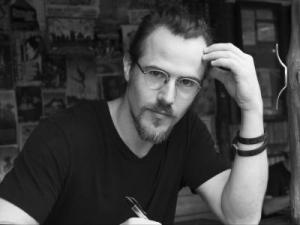
OOO is thrilled to share this interview between singer Angela Irving and composer David C. Adams, whose chamber song cycle “Five Mystic Songs” will premiere on Fri, Nov. 18th at the Inaugural Fresh Squeezed Ounce of Opera.
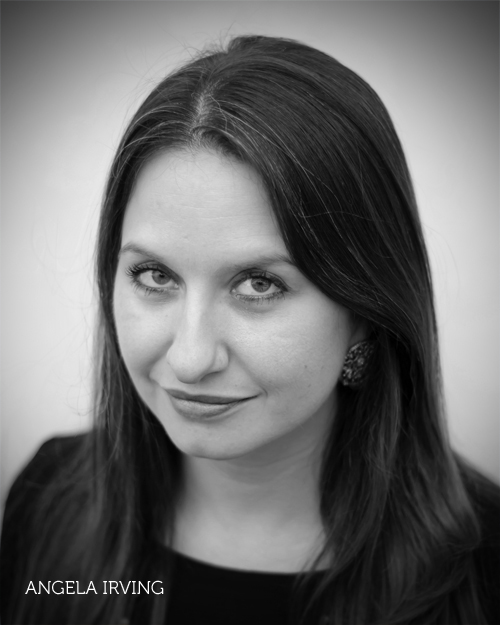
Angela: Tell us about Olivia Pepper, the author of the text. And how did you all meet?
David: Olivia is unique. I’ve never met another human like her. I think we met at a funky, artsy, hippie-ish party, around a giant campfire, though I’d already heard about her. Sometime later she painted my face for a body-paint photoshoot in South Austin. What does it mean that she’s a culture creator? Let’s take the snapshot approach. In recent months she’s lectured on Tarot in Chouzhou, hugged a camel in Mongolia, snapped a quick self-portrait in Bulgakov’s mirror, gone nocturnal in Berlin, choreographed a dance in Paris, and finished two books: one, a novel; the other, accompanying a Tarot deck she created with local Renaissance woman, Katie Rose Pipkin. And this is only a glance at the surface. I’m fortunate to be working with her words!
A: Are there specific composers and/or performers that have helped inspire some of the different stylings you write for voice and strings in this cycle?
D: My first instrument was viola, I play violin now, and I studied singing and writing for voice with David Small while I was getting my composition degree at UT, so these forces are all pretty comfy for me. As for the stylings here, I can’t point to any particular influence. All the extended techniques arise naturally out of the text, which points to a recognition of beautiful simplicity. For example, tuning, really listening while playing open strings, is not unlike focusing on the breath during meditation.
A: There’s an element of performance art in this cycle. How did you go about deciding to add that as a part of this piece? And has performance art played a role in other pieces you written?
D: This text is about waking up to the mystical reality that surrounds, permeates, pervades, and is us. The first song paints the relentless anxiety we feel in our hyper-stimulated lives, and the rest are about waking up from that. It seems only natural to make use of extramusical means – a waking up to possibilities to inspire waking up to possibilities. I have incorporated performance art elements into works in the past as well: my Suite of Dances for string quartet features some performance art elements, including a throat-clearing by the first violinist to prompt a few obligingly dulcet notes from the rest of the quartet.
A: I heard that your next project is an opera! Tell us about that!
D: Well, right now I’m working hard on a concerto for french horn and chamber orchestra to be premiered next year by Louisville’s Orchestra Enigmatic, but once I finish that up, I’ll be setting to work on a chamber opera.
I heard a story this summer when I was on my way to the mountains. The woman sitting next to me on the plane was en route to visit her mother in law, who we’ll call Elizabeth. Elizabeth was recently widowed. Her husband had been young, in his sixties, and their grandchildren had just started rolling in. Her husband’s passing aroused the pain of empathy in me, but took on new depths and layers when the woman told me more.
Elizabeth had been a nun, living in a convent, when she met her husband. He had been visiting his sister, also a nun there, when Elizabeth and he first crossed paths. Something changed for them when they met, and he started visiting more often – or course, purportedly to see his sister. They invited Elizabeth to join them for Christmas with their whole family, and when she did, all her plans fell away before her eyes… and I thought, This is an opera! A couple weeks later, I shared this vision with Julie Fiore (director of One Ounce Opera). She agreed, and here we are.
Opera is expensive though. At the Met, the composer’s fee alone can approach half a million dollars. We’re doing it much less extravagantly, but it will still take an unbelievable amount of time, energy, and money – and we’re still not sure how we’re gonna pay for it all! We’ve started a crowd funding campaign though. (click here for more!)
(And stay tuned for more information about this exciting co-production between Mr. Adams and OOO!)
_________
Always drawn to sound and music, David C. Adams‘ ears have led him on a lifelong adventure through all things auditory. He picked up a little bit of trumpet, recorder, and piano before diving into the viola section of his 5th grade orchestra, where he continued to develop through high school, leading the section his senior year. By then, he had found the guitar, which came easily to him.
David’s musical exploration has included performing and recording as a lead guitarist, bassist, pianist/keys player, violinist, violist, cellist, and singer, both as a sideman and as a frontman. Turning down a generous offer from the New England Conservatory, he elected to work with the wonderful composition and vocal faculties at UT’s Butler School of Music, where he recently graduated with a degree in composition.
Now, having jammed original funk-rock onstage at Antone’s, premiered works written by himself and others in halls from Austin to Chicago, performed the symphonic music of Mozart in Vienna, and sung Fauré’s Requiem in Carnegie Hall, and while maintaining an active performing and recording career, David spends his days writing newly commissioned works, jamming with his band, and teaching music to a new generation.
Find out more about David: http://davidcarltonadams.com

Meet Michael Mikulka, Winning Composer of FSOAS 2016
OOO is happy to introduce Michael Mikulka, who penned both a short cycle for tenor and solo song for soprano. These winning pieces will be performed at the Inaugural Fresh Squeezed Ounce of Art Song on Fri, Nov 18. Danny Castillo, who will sing “A Wind Among the Reeds,” and Brittany Santos, who will sing “I Am Vocalist,” had these questions for the composer:
Danny: You have such a dynamic repertoire of compositions which include these large, orchestral, high-intensity pieces such as your Krikkit Variations. Do you find any special challenges when writing music in a smaller scale, such as art song, in terms of compositional and musical tools and techniques available to you?
Michael: Thank you! There are a lot of differences in the way I approach writing for large ensembles and the way I approach writing an art song. One obvious change is timbre: with a large ensemble (especially a wind band or full orchestra), you can make interesting color combinations with ease because you have such a wide variety of instruments at your disposal. When writing for voice and piano, most of the color comes from the vocal (and piano) register, the consonant/vowel sounds of the lyrics, and the texture and chord spacing of the piano, so it’s much more about the details.
Some melodies or musical ideas work best in chamber music, some work best for a large scale work, and some will work well in either format. Smaller instrumentations tend to benefit from music that feels as if it’s a story being told by one person. Any melody or accompaniment figure played by only one performer is going to sound more personal and intimate than if it is being played by several people. The intimacy of art songs generally allows for the melodies and accompaniment figures to have more subtlety and more room for interpretation.
When there are lyrics, clarity in the vocal line is necessary, which requires the piano part to play a secondary role whenever the vocalist is singing. In addition, the listener’s focus will typically be directed more at the vocalist. These factors make it more challenging to balance the piano part. It needs to be interesting and have some complexity, but not so much that it distracts from the voice. The piano and vocal parts also need to relate to each other, but the piano often has to be subservient. I think the two pieces I have on this concert approach this challenge in very different ways.
D: You write so well for the voice. Do you see any operatic engagements in your future? Is that a genre of music that you would like to explore?
I would love to write an opera (or possibly a musical or some hybrid of the two). It’s such a time-consuming thing to do and it’s extremely challenging to line up a first performance, so I’m probably going to have to wait until somebody commissions me. I do have a pair of ideas floating around, though, and every year or so, I plan them out a little bit more. At some point, I’d like to write a one act opera with a condensed orchestration, but the ideas I currently have are both large scale.
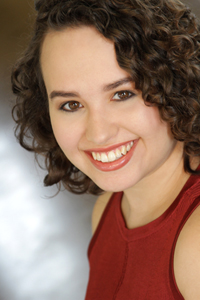
Brittany: What type of character did you have in mind for “I Am Vocalist,” and did you have a specific inspiration behind this character?
M: There are plenty of negative stereotypes for different types of musicians: “low brass players are crude, dumb, and often drunk.” “Flute players are shallow and flaky.” “Trumpet players think they’re the greatest and make sure everybody else knows.” “Percussionists are impatient, mentally unstable, and can’t read music.” “Vocalists take liberties with the music to hide their technical shortcomings: they can’t sing in rhythm or do anything that is harmonically challenging. That’s why all they ever sing is the same small group of Italian, German, and French art songs.” “Most instrumentalists think they could become a successful vocalist with a few weeks of practice and a diction class.”
Sopranos are “the most extreme of all the vocalists:” some musicians would suggest that they have the “morals and restraint of a trombone player,” the “ditziness of a flutist,” the “self-importance of a trumpeter,” and the “patience and ear-training skills of a percussionist.” Oh, and they’re also “drama queens who require the spotlight at all times.”
With “I Am Vocalist”, I envisioned a soprano character who fights back against these offensive stereotypes about vocalists’ technique and ability, while proudly delighting in a few of the others.
Slightly less important (as usual), is the sarcastic and passive aggressive piano accompanist (collaborative pianist!!), who harbors more than a little resentment at the tiny fraction of their ability which is being utilized.
B: Who are your major influences in composition and what parts in the piece were inspired by those influences?
M: When I have to name my biggest influences or favorite composers (we composers get asked this every few weeks), I normally mention Ravel, Stravinsky, Prokofiev, and Shostakovich. However, “I Am Vocalist” is nothing like their music (with the possible exception of Shostakovich’s sarcasm). This led me to thinking about some of my other influences.
Here are a few aspects of other composers’ music that I think influenced “I Am Vocalist”:
-Mozart’s clarity, structure, and pompous self-satisfied giddiness
-The lightness of the tone in Gilbert + Sullivan songs, and how the vocalist is really placed front and center
-The “I can sing just one note” concept was influenced by a vocal composition by Philip Rice
There’s much more influence in this piece than that, though. Whenever we compose, we’re influenced not only by the other music we’ve heard, but also by our non-musical tastes and experiences. The balance between “musical influences” and “non-musical influences” varies from piece to piece, which is something I wasn’t really actively aware of until I thought about this question. For me, the content of this piece is towards the “non-musical influences” extreme of the continuum: “I Am Vocalist” is probably a good lens for how influences in my life have shaped the way in which I express playfulness, sassiness, pride, and sarcasm.
_________
Michael Mikulka recently completed his DMA in Composition at the University of Texas, where he studied with Donald Grantham, Russell Pinkston, Yevgeniy Sharlat, and Dan Welcher. He completed his MM in Composition at Central Michigan University (studying with David Gillingham), and received his undergraduate degree in Music Education from Rutgers University, where he co-founded the Rutgers Undergraduate Composers Recital.
Over 25 of Michael’s compositions have been honored as a winner or finalist in competitions or calls for scores. His pieces have been performed by members of the Dallas Symphony Orchestra, Seattle Symphony, Vancouver Symphony Orchestra, and New Jersey Symphony Orchestra, as well as by the performance faculty of several major universities.
Michael is the founder of newbandmusic.com and newchambermusic.org, free services which promote self-published music written by emerging composers. He was also the creator and conductor of the Vine Orchestra, which premiered over 50 (six second or less) compositions. Michael is a horn player, and has recently performed with the UT Wind Ensemble, Symphony Orchestra, and Horn Choir, as well as premiering several solo and chamber pieces.
Find out more about Michael!
http://www.michaelmikulka.com/
Twitter: @Michael_Mikulka