

OOO Nominated for 11 2025-26 BIP Awards!
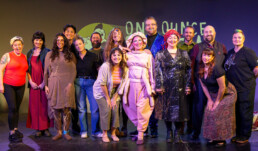
Big gratitude! This team – and the creators whose works we were entrusted with – earned eleven 2025-26 B. Iden Payne Awards Council nominations, for our annual short opera showcase Fresh Squeezed Ounce of Opera (FSOO) 2026.
THANK YOU!
Here’s who you can join us giving a big CONGRATS to:
Outstanding Production of a Short Play
- FOREVER
- MUD GIRL
Outstanding Direction of a Short Play
- Julie Fiore (FSOO 2026)
Outstanding Original Score
- Elizabeth Gartman, FOREVER
- Omar Najmi, MUD GIRL
Outstanding Short Script
- Christine Evans, MUD GIRL
Outstanding Ensemble
- Avery LaRue & Anneliese Sandoval (Poly I and Poly II), MUD GIRL
Outstanding Performer in a Short Play
- Liz Cass (Tardigrade), FOREVER
- Andrea Ochoa (River), MUD GIRL
Outstanding Media Design
- Matt Smith (FSOO 2026)
Outstanding Makeup Design
- Carol Brown (FSOO 2026)
As we crack open the book on our 15th season and journey towards FSOO 2027, our gratitude (once again) overflows for this supportive community and for the breadth of the arts landscape in this place we call home. Thank you, friends. HUZZAH!
This project is supported in part by an Elevate Grant of Austin Arts, Culture, Music and Entertainment.
Searching for past performances, photos, or videos? Visit our Facebook, YouTube, and Instagram for archives of our work.

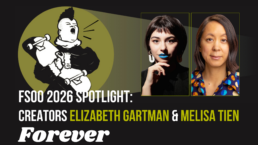
FSOO 2026 Spotlight: Elizabeth Gartman & Melisa Tien
Meet the composer and librettist of Forever, one of the three winning micro-operas for FSOO 2026!
Often the most poignant and powerful dialogue happens between those who create and those who perform. That’s why OOO connects our singing-artists with the composers and librettists selected for the 8th Fresh Squeezed Ounce of Opera.
If you’re curious about the story inspiration, what to listen for, what to expect, and more, you’re in the right place.
Here, get the scoop behind the story of Forever by Elizabeth Gartman (composer) and Melisa Tien (librettist) – with questions from the cast – designed to enhance your experience.
First, a quick synopsis:
Eons after humans have gone extinct, a strange, chemically supercharged world remains. Perhaps all a survivor can do is try and navigate their surroundings, one toxic blast at a time. As the environmental legacy of the human species gets heftier, allow a pair of musically inclined polyfluoroalkyl substances and a hardy microorganism to paint a picture of a possible future Earth. Forever is a tragicomic opera about figuring out one’s place on a changing planet.
Commissioned through the American Opera Initiative at Washington National Opera
How is the man-made/non-human nature of (characters) The Wrapper and The Wristband – when compared to the organic nature of the Tardigrade – demonstrated by the way you wrote the textual cadences and the musical structures in this work? And do these things change over the course of their story arcs?
Melisa: When I was thinking about how to represent the microplastics in the libretto, I figured I’d try and make them seem as human as possible—that is, with characteristics like shyness or self-consciousness—since they were created by humans. I aimed for speech mannerisms that communicated ‘needy and cute’ because I imagined if extraterrestrial beings were to observe humans, that’s how they might sum us up. Subsequently it seemed like a good idea to give the tardigrade a superhuman aura, with a heightened manner of speaking befitting a benevolent, mischievous deity. We meet the tardigrade as they’re singing a beautiful aria that borders on a lamentation. They’re singing about the natural world they came from, which no longer exists as it once did, but which they still find beauty in. The text is more lyrical here than anywhere else in the opera, and is a direct through-line to my personal feelings about our natural environment.
Elizabeth: The non-organic characters Wrapper and Wristwatch are musically represented as “otherworldly” through constantly changing meters, extended vocal techniques, large leaps, and registrally expansive orchestrations. In contrast, the organic Tardigrade is introduced with stagnant meter and significant consonance. While the Wristwatch doesn’t really change from start to finish – his intentions as a character don’t quite evolve as significantly – the Wrapper becomes more confident both in herself and as to how she’d like to spend the remainder of her days decomposing. She leads the trio more by the end, and soars above vocally.
In a world with so much plastic usage and companies utilizing these products, what brought you to choose the origins of the two plastic characters?
Elizabeth: When Melisa and I were initially given the prompt to propose three pitches for a story, one of those three, we decided, would be a “story centered on non-human characters.” Melisa suggested the characters be ones who outlast the human lifespan. Through research, forever chemicals were brought up and decided upon. Melisa brought both humor and science in crafting the characters from there.
Melisa: I came up with the personalities of each character first, with the intention of having them be funny, relatable, and on opposite ends of the status spectrum. Once I figured out what kind of personalities they had, I thought about the kind of plastic product they would have come from that would seemingly go hand-in-hand with their respective personas. The suave-on-the-outside-yet-insecure on-the-inside character felt like it could possibly originate from a high-end smartwatch. In contrast, the shy-at-first-then-highly-confident character seemed like it might originate in a product associated with low status yet was something everyone partakes in. I thought of fast food products, which led me to fast food wrappers. All that was left was to find the humor in their origins’ brand names.
What is the inspiration behind the directive for the singers to use a vocal fry sound? And the Michael Jackson/”The Girl is Mine” reference – what is it about that vibe that speaks to you for this piece?
Elizabeth: The vocal fry, to me, represents the “life” leaving the characters following the chaotic, sped-up glimpse at their previous lives. It is the last bit of their existence before they have decomposed so much that they are not recognizable as their previous forms anymore. Darkly, this mirrors the image and sound of life leaving the human population on the brink of apocalypse. When Melisa added the MJ quote into the libretto; I interpreted it as the Tardigrade referencing an “ancient musical relic,” relating their distant connection to the humans who lived many years ago.
Melisa: As I recall, I really wanted the tardigrade to do something goofy yet graceful onstage, particularly while the Wristband and Wrapper were arguing over what, exactly, the tardigrade was. I suggested a moonwalk in the stage directions, which led to an actual MJ reference in the text, which then made me wonder if things were getting too specific. In the end, we kept these in, because it seemed just strange and incongruous enough to cause head-scratching and be funny at the same time—which is how tardigrades are often viewed, and come to think of it, how MJ was often viewed.
This project is supported in part by an Elevate Grant of Austin Arts, Culture, Music and Entertainment.
Searching for past performances, photos, or videos? Visit our Facebook, YouTube, and Instagram for archives of our work.

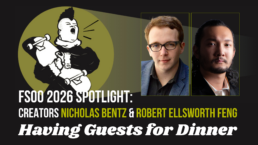
FSOO 2026 Spotlight: Nicholas Bentz & Robert Ellsworth Feng
Meet the composer and librettist of Having Guests for Dinner, one of the three winning micro-operas for FSOO 2026!
Often the most poignant and powerful dialogue happens between those who create and those who perform. That’s why OOO connects our singing-artists with the composers and librettists selected for the 8th Fresh Squeezed Ounce of Opera.
If you’re curious about the story inspiration, what to listen for, what to expect, and more, you’re in the right place.
Here, get the scoop behind the story of Having Guests for Dinner by Nicholas Bentz (composer) and Robert Ellsworth Feng (librettist) – with questions from the cast – designed to enhance your experience.
First, a quick synopsis:
When Marcus and Laura attend a “dinner for three” hosted by the refined but eccentric Christoph Aberfield, things take a turn for the macabre. Between courses and questionable puns, the two become increasingly suspicious of their host. Will the two catch Christoph red-handed, or will they meat their demise? The steaks have never been higher…
Horror and comedy both depend heavily on timing and tension. How did opera as a medium influence the way you built those moments of suspense and comic release?
Robert: For me, opera is entirely built on timing and tension. People often say that music is how we decorate with time, and opera is that but with extreme precision. In that way, I feel the genres of horror/comedy and opera helped each other out in winding up a punchline or driving up tension (horror films have done this particularly well with their scores).
What was your inspiration in creating the particular sound world of this piece? Any specific musical influences?
Nicholas: When I was writing the music for Having Guests for Dinner, I was going through a particular phase of listening deeply to the music of early cartoons. I had the music of composers like Carl Stallings and Scott Bradley on repeat as I studied their sense of timing and how they used music to convey humor. I think humor and irony are some of the hardest things to get across in music, so it was important to look to models of pieces that really authentically engage in slapstick and comedy.
In working through your work, we’ve noticed tempos that ebb and flow depending on which character has the floor. How do you see tempo playing a role in how your characters were created?
Nicholas: Tempo is really integral to character for me, but I would go a step outward and say that the important facet for me is pacing. The speed in which someone says a line can sometimes say more than the line itself, and when these two things are at odds it can lead to an exciting sense of tension that can propel a narrative forward. The way that time is handled conveys who’s ‘in charge’ of the scene, who’s reacting to who, and shifts in time can accentuate power exchanges between characters. Like Robert said earlier, opera is so much about timing and tension, and how we ratchet it up and let it deflate (or explode!).
This project is supported in part by an Elevate Grant of Austin Arts, Culture, Music and Entertainment.
Searching for past performances, photos, or videos? Visit our Facebook, YouTube, and Instagram for archives of our work.
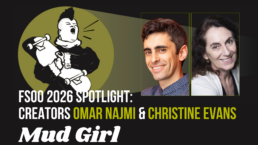
FSOO 2026 Spotlight: Omar Najmi & Christine Evans
Meet the composer and librettist of Mud Girl, one of the three winning micro-operas for FSOO 2026!
Often the most poignant and powerful dialogue happens between those who create and those who perform. That’s why OOO connects our singing-artists with the composers and librettists selected for the 8th Fresh Squeezed Ounce of Opera.
If you’re curious about the story inspiration, what to listen for, what to expect, and more, you’re in the right place.
Here, get the scoop behind the story of Mud Girl by Omar Najmi (composer) and Christine Evans (librettist) – with questions from the cast – designed to enhance your experience.
First, a quick synopsis:
A catastrophic flood has reshaped the world. MAUDE, a scientist, fled the city’s toxic remnants over a decade ago, painfully relinquishing her work and her connection to the networks that power it. She rescued RIVER, a young child, clinging to a shopping basket hurtling down the river. But now that RIVER’S reaching adolescence, she needs companions, a bigger world, and her independence. Can MAUDE keep her safe from a world she sees as brimming with human threats, pathogens, and dangerously mutating AI?
Commissioned through the American Opera Initiative at Washington National Opera
Do you consider the story to be a cautionary tale for the future of humanity due to the expedited progression of AI and technology?
Christine: No. We don’t need one- we’re already living it! I’m more interested in creating wonder and asking questions, than in conveying a message.
For River, curiosity and loneliness drive her to build her Mud Girl. She sees no difference between plastic and mud— they’re both part of the only world she’s known. Maude tried to protect her but Maude is caught between the world she’s lost, and the new one River is in. How do you find joy and a way forward in a melting, morphing world? Their struggle is over that question.
Omar: No, I actually don’t think of Mud Girl as a ‘cautionary tale’ per se. I think one of the fascinating elements is the generational difference between Maude as someone who knew a very different world before, and River who knows only this world. There is a purity to River’s vision of the world, and through her lens, the world they inhabit, the remnants of the world before, and her creation Poly are not malevolent. They are in a sense morally neutral, and I think this piece aims to step aside from judgment and consider that the world WILL change and transform, through climate change, through technology, and address the big question of what we do with that new world. That said, I am personally actively opposed to all current iterations of generative AI.
What specific folklore inspired the story?
Omar: One of the influences that Christine cited early on in our brainstorming of this story was the myth of the Golem from Jewish folklore. Elements of this mythology as I understand it include the creation of a humanoid creature from mud or clay, the responsibility that comes with playing God and creating life, and the danger that such a creature could pose if not properly returned to inert earth.
Christine: MUD GIRL is an attempt to imagine hope in a changed world. The idea came to me in a dream: a voice said, “I was a frog, a leaf, a star. And I will be again”. When I woke, I saw these two figures- River, a girl, and Maude, a middle-aged woman- cooking frogs over a fire, under a huge broken bridge. Together, these elements made me wonder about deep time- how forms change over time, whether the borders between living and non-living are porous. And I’m fascinated by creation tales- Frankenstein’s monster; the Jewish Golem (as Omar mentioned), who is alive by virtue of a letter drawn on its forehead, which can be erased. I love this idea that writing summons a being into life.
Do you feel that Poly reaches full consciousness by the end of the story? In other words, an ability to make their own decisions and experience full emotions?
Christine: I would say, she/they are definitely alive— she’s learned how to “build” her being from ones and zeros— and she has the desire of every living thing to exist. In nascent state they are two (they); when they fully connect, they become one being (she, or “we”). She can feel fear, and connection, and wonder—- perhaps like any newborn being who has the ability to grow and become.
Omar: My short answer is yes, Poly reaches sentience. We know in her words that she experiences fear. But the more involved answer is that this piece interrogates our definitions of sentience and sapience and exposes the porousness of our conceptual barrier between what is and isn’t alive. Poly’s name has several meanings. On the surface, River names her after the murmuring of component chemical names she hears. But she is also named Poly because she is a composite being, comprised of many different infinitesimally small ‘grains of sentience’ working together as a whole, bound by River’s naming. This was a big part of why we chose to have Poly performed by two singers in simultaneous counterpoint. And in a certain regard we too are composite creatures. There is microbial life within us that is intrinsically tied to our survival, the mitochondria in our cells have their own DNA – so really, how different are we from Poly? She is a new kind of life, for sure, but yes, I think she is alive and conscious!
Christine: And the “shiver” in the story is her coming to life— what might happen next is an open question!
This project is supported in part by an Elevate Grant of Austin Arts, Culture, Music and Entertainment.
Searching for past performances, photos, or videos? Visit our Facebook, YouTube, and Instagram for archives of our work.

8th Fresh Squeezed Ounce of Opera
Immerse yourself in dynamic storytelling
Hundreds experienced Austin’s annual micro-opera showcase – one of the most anticipated and award-winning classical events in the region!
And only in the “Live Music Capital of the World,” Austin, Texas.
A one-of-a-kind theatrical escape. A perfect lil’ summer adventure.
Three micro-operas in a single 70-minute program at the 8th Fresh Squeezed Ounce of Opera [FSOO].
Who is FSOO for? EVERYONE.
All at East Austin’s hub for immersive, inventive stuff, dadaLab. Our 2026 dates were July 17, 18 (ASL-interpreted), 19 (m), 21, 23, 24, + 25 (m). Evening shows were at 7:30, matinees (m) at 2:30. Doors + complimentary bar opened 30 minutes before, general admission seating. Only 85 seats per show! $25 got you in.



Stage Director & Producer: Julie Fiore
Music Director & Pianist: Joseph Choi
Technical + Lighting Director: Matt Smith
Assistant Director: Carol Brown
Stage Manager: Monica Kurtz
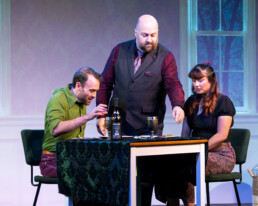
Having Guests for Dinner
Music by Nicholas Bentz. Libretto by Robert Ellsworth Feng.
Laura – Annisha Mackenzie
Marcus – Brian Minnick
Christoph – Stephen Maus
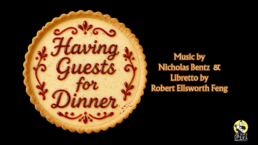
When Marcus and Laura attend a “dinner for three” hosted by the refined but eccentric Christoph Aberfeld, things take a turn for the macabre. Between courses and questionable puns, the two become increasingly suspicious of their host. Will the two catch Christoph red-handed, or will they meat their demise? The steaks have never been higher…
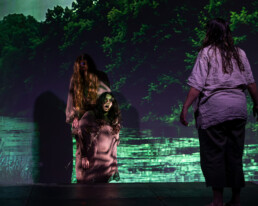
Mud Girl
Music by Omar Najmi. Libretto by Christine Evans.
River – Andréa Ochoa
Maude – Hillary Schranze
Poly I – Avery LaRue
Poly II – Anneliese Sandoval
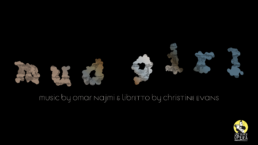
A catastrophic flood has reshaped the world. MAUDE, a scientist, fled the city’s toxic remnants over a decade ago, painfully relinquishing her work and her connection to the networks that power it. She rescued RIVER, a young child, clinging to a shopping basket hurtling down the river. But now that RIVER’S reaching adolescence, she needs companions, a bigger world, and her independence. Can MAUDE keep her safe from a world she sees as brimming with human threats, pathogens, and dangerously mutating AI?
Commissioned through the American Opera Initiative at Washington National Opera
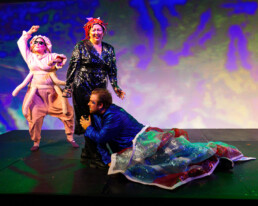
Forever
Music by Elizabeth Gartman. Libretto by Melisa Tien.
The Wrapper – Paige Patrick
The Wristband – Lucas Hickman
The Tardigrade – Liz Cass
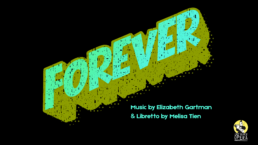
Eons after humans have gone extinct, a strange, chemically supercharged world remains. Perhaps all a survivor can do is try and navigate their surroundings, one toxic blast at a time. As the environmental legacy of the human species gets heftier, allow a pair of musically inclined polyfluoroalkyl substances and a hardy microorganism to paint a picture of a possible future Earth. Forever is a tragicomic opera about figuring out one’s place on a changing planet.
Commissioned through the American Opera Initiative at Washington National Opera
Hey, curious arts lover! Overall, what should you expect at a FSOO?
A super low-lift evening (or afternoon)! Our annual showcase is a great escape, regardless of your previous experiences with opera. Three brand new, dynamic works sung in ~20 minutes each, in English, performed by local pros in an intimate, immersive, air-conditioned, welcoming, and unexpected space. General admission seating means you choose your own adventure. And a complimentary bar with beer from Live Oak Brewing (as well as wine, sparkling water, and still water) rounds out your experience.
For our 2026 showcase, One Ounce Opera reviewed over 100 works submitted from all over the world to line up an engaging program of three (3) new micro-operas that will transport you with the sonic tellings of connective, transformative, oh-so-human stories.
Short stories that are soooooo now. Dynamic. With characters that feel familiar, yet…not. Laughs, goosebumps, thrills, and chills. You get it all in one 70-minute program!
Recommended for ages 12 and up, due to brief moments of spicy language and adult situations.
FSOO is presented at dadaLab (2008 Alexander Ave, 78722).
Sponsored by Live Oak Brewing

This project is supported in part by an Elevate Grant of Austin Arts, Culture, Music and Entertainment.

Announcing the Winning Short Operas for FSOO 2026!
Our biggest announcement of the year is here. The program is set, and we can’t wait to share this with you.
Especially because this one was extra! This season’s selection process was by far the most extensive yet. One Ounce Opera, in our annual call for scores, reviewed a record 105 short operas submitted from all over the world – more than double what we received last season. High-quality, engaging works from folks living as far away as Italy and Australia and as close as a neighborhood over.
We worked diligently to line up an engaging program of three micro-operas (in English!) that will immerse you in the sonic tellings of connective, important, oh-so-human stories. Stories that feel NOW. Dynamic. Transformational. Familiar, yet…not. With characters – and voices – you won’t soon forget.
And this summer, we’ll open the doors to the warehouse and welcome you to indulge in our freshest crop of three micro-operas. Performed together. On a single program:
The 8th Fresh Squeezed Ounce of Opera (FSOO), July 17, 18, 19(m), 21, 23, 24, and 25(m), 2026
Make plans now to be there for one of the most anticipated and award-winning classical events of the season. We’ll once again transform dadaLab in East Austin and invite you and your friends to reimagine opera in an unexpected space. Want an idea of what to expect? Explore last season’s event!
Having Guests for Dinner
Music by Nick Bentz. Libretto by Robert Ellsworth Feng.
Laura – Annisha Mackenzie
Marcus – Brian Minnick
Christoph – Stephen Maus
Mud Girl
Music by Omar Najmi. Libretto by Christine Evans.
River – Andréa Ochoa
Maude – Hillary Schranze
Poly I – Avery LaRue
Poly II – Anneliese Sandoval
Forever
Music by Elizabeth Gartman. Libretto by Melisa Tien.
The Wrapper – Paige Patrick
The Wristband – Lucas Hickman
The Tardigrade – Liz Cass
FSOO Production Team
Stage Director – Julie Fiore
Music Director – Joseph Choi
Technical, Lighting + Projections Director – Matt Smith
Assistant Director – Carol Brown
Stage Manager – Monica Kurtz
Produced by One Ounce Opera
This project is supported in part by an Elevate Grant of Austin Arts, Culture, Music and Entertainment.
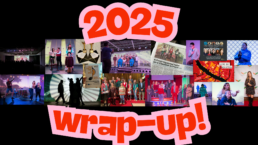
One Ounce Opera's 2025 Wrap-Up
In 2025, One Ounce Opera re-imagined opera in a new venue, introduced you to new micro-works and new local singers, and earned nods and recognition that made our hearts explode.
In a year filled with good stuff for OOO and our collaborators & community, a few moments deserve to be highlighted. Here is a quick wrap-up of the growth, beauty, and connectedness we experienced in 2025.
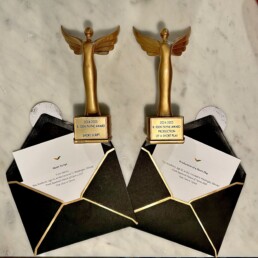
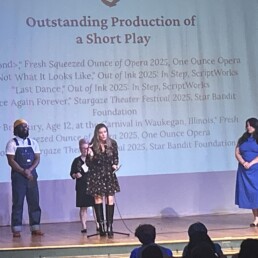
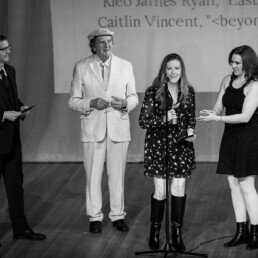
One Ounce Opera wins 2 B. Iden Payne Awards in 2025
During the annual celebration, OOO's 15 nominations resulted in 2 big wins for Outstanding Production of a Short Play (2nd year in a row), and Outstanding Original Short Script – both for Tyler Mabry's micro-opera "Ray Bradbury...", part of the 7th Fresh Squeezed Ounce of Opera showcase.
Named to "Top 10 Shows List" by the Austin Chronicle
WOW! What an incredible honor to be included in Cat McCarrey's year-ending list of the top shows she saw all year. We especially appreciate her descriptive subtitle of "bold, empathetic, boundary-pushing creations." Mission (literally) accomplished!

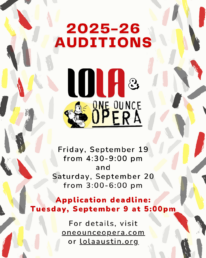
Offered co-sponsored auditions with LOLA
For the 2nd year in a row, singers just had to apply once and sing once for two indie opera companies in Austin! Not only does this help us build community, it allows for LOLA (Local Opera Local Artists) and OOO to collaborate on yearly performance scheduling, talk about resource sharing, and check in on how we are meeting the needs of our artists and audiences.
Two Free Annual Concerts – Holiday Singalong + Songs of Love
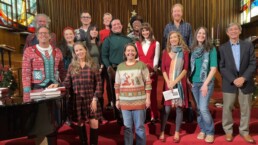
The tradition continues! For 13 years – even during the pandemic – OOO hasn't missed the chance to share music and joy with audiences (and provide paid solo performance placements for local singers) in partnership with the long-running Thursday Noon Concert Series in the acoustically gorgeous Central Presbyterian Church Sanctuary. Also home to concerts during SXSW, this venue and its folks welcome us each year in February (the Valentine's Day-themed "Songs of Love") and December (a spirited, inclusive "Holiday Singalong" with Peter Bay and Guests) for short, FREE, lunchtime community events that delight and inspire. Here's a pic of the entire crew from this year's Holiday Singalong, attended by a record number of folks in 2025!
3rd Appearance at Here Be Monsters Indie-Classical Fest
This year, singers Veronica Williams and Amy Selby reprised the poignant song cycle "Songs of Remembrance and Resistance" by Kevin March at the annual community celebration featuring 20 total Austin groups, Here Be Monsters, at Radio/EAST. Joseph Choi on keys, Julie Fiore produced.
7th Fresh Squeezed Ounce of Opera
Our award-winning "crown jewel" welcomed audiences to a new home, dadaLab!

The 7th iteration of our internationally-known + juried micro-opera showcase welcomed audiences to a cool new home (east Austin’s creative warehouse venue dadaLab), where they experienced three contemporary short works presented in a single program. We’ve mentioned the results of the showcase above (and it feels gorgeous to get noticed), but the real value was in the growth and expansion for the artists on stage, off stage, and those who penned the works themselves. Professional videos (by videographer Jack Kloecker), pro performance photos (by photog Steve Rogers), engaged + sold-out houses, time spent with friends and colleagues creating art, and the celebrations that followed were pluses as well! Overall, another deeply satisfying run for our annual flagship project. Click each pic below to WATCH EACH MICRO OPERA, or on the showcase image to watch the entire 2025 program!


2025 by the numbers
how our work directly impacted our community of folks
76
singers, pianists, artisans, and creatives paid for their work this calendar year
1000+
in-person audience members who experienced our work this calendar year
If you’d like to celebrate the wins of 2025 and invest in the future of reimagining opera in unexpected spaces, we’d love to invite you to join the hundreds who support our work – and make Austin all the more livable and lovely.
This project has been funded in part by the Cultural Arts Division of the City of Austin Economic Development Department.
Searching for past performances, photos, or videos? Visit our Facebook, YouTube, and Instagram for archives of our work.

OOO Nominated for 15 2024-25 BIP Awards!
This team – and the creators whose short works we were entrusted with – were gifted with 15 (!!!) 2024-25 B. Iden Payne Awards Council nominations for Fresh Squeezed Ounce of Opera (FSOO) 2025!
We. Are. FLOORED. And beyond grateful!
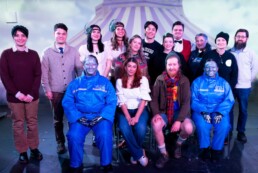
Speaking of beyond, here’s who you can join us giving a big CONGRATS to:
Outstanding Music Direction
- Joseph Choi, Fresh Squeezed Ounce of Opera 2025
Outstanding Original Score
- Tyler Mabry, Ray Bradbury, Age 12, at the Carnival in Waukegan, Illinois
- Lisa Neher, <beyond>
Outstanding Original Short Script
- Laura Fuentes, Las Auténticas
- Tyler Mabry, Ray Bradbury, Age 12, at the Carnival in Waukegan, Illinois
- Caitlin Vincent, <beyond>
Outstanding Orchestra in a Musical
- Fresh Squeezed Ounce of Opera 2025
Outstanding Stage Management
- Monica Kurtz, Fresh Squeezed Ounce of Opera 2025
Outstanding Performer in a Short Play
- Patricia Combs (142-6), <beyond>
- Sandra Mercado (Luz), Las Auténticas
- Hilary Schranze (Young Ray), Ray Bradbury, Age 12, at the Carnival in Waukegan, Illinois
Outstanding Direction of a Short Play
- Julie Fiore, <beyond>
- Julie Fiore, Ray Bradbury, Age 12, at the Carnival in Waukegan, Illinois
Outstanding Production of a Short Play
- <beyond>
- Ray Bradbury, Age 12, at the Carnival in Waukegan, Illinois
As we enter our 14th season and begin the journey towards FSOO 2026, our gratitude overflows for this supportive community, for you (yes, you!), and for the breadth of the arts landscape in this place we call home. Thank you, friends. Now, go see a show this weekend. And cheers!
This project has been funded in part by the Cultural Arts Division of the City of Austin Economic Development Department.
Searching for past performances, photos, or videos? Visit our Facebook, YouTube, and Instagram for archives of our work.
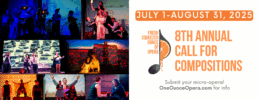
The 8th Annual Fresh Squeezed Ounce of Opera Competition Portal is NOW OPEN!
THE PORTAL IS OPEN for 2025, to be performed in our 2025-26 season!
To see details and rules, and to apply now, click on the link below.

FSOO 2025 Spotlight: Tyler Mabry
Meet the composer and librettist of Ray Bradbury, Age 12, at the Carnival in Waukegan, IL, one of the three winning micro-operas for FSOO 2025!
Often the most poignant and powerful dialogue happens between those who create and those who perform. That’s why OOO connects our singing-artists with the composers and librettists selected for the 7th Annual Fresh Squeezed Ounce of Opera.
If you’re curious about the story inspiration, what to listen for, what to expect, and more, you’re in the right place.
Here, get the scoop behind the story of Ray Bradbury, Age 12, at the Carnival in Waukegan, IL, written by Tyler Mabry – with questions from the cast – designed to enhance your experience. Bonus: you will be among the very first to hear this work, making its World Premiere!
First, a quick synopsis:
The true story, as (very) often told by beloved American author Ray Bradbury (Fahrenheit 451, Something Wicked This Way Comes, The Martian Chronicles), of the mysterious, fantastical Dill Brothers Circus that sparked his interest in becoming a writer. A cascading carousel of wonder!
What led you to uncover this specific anecdote from Ray Bradbury’s life? Is this experience, which influenced him both personally and as a writer, something that has resonated with you for a long time, or was it a recent discovery that sparked the creation of this work?
Tyler: I have admired Bradbury’s work since I was a 12 year old boy myself, but I only recently learned about his boyhood encounter with Mr. Electrico. The story immediately resonated with me, for personal as well as literary reasons. When I came to Austin in the 90s, I was fairly young and sheltered, but I was fortunate to have encounters and friendships with people who — like Mr. Electrico — introduced me to the city’s musical and theatrical scenes. Coming from a rural and conservative background, as I did, I met many people who at first seemed very strange to me, like they were from a different universe! But it was an incredible universe, and I knew that I wanted to belong to it. Those connections absolutely transformed my life.
What was it about this story that led you to adapt it into an opera?
If there was one detail that solidified my decision to make this into an opera, it was the moment when Mr. Electrico stands with young Ray by the lake to tell him “you were my best friend in France, and you died in my arms in the battle of the Ardennes Forest.” When I saw that, I thought to myself, “now THAT is an aria!” I love opera subjects that are larger than life, and I’ve always been attracted to dramatic works based on real events. So this story seemed like a natural fit.
How important was it for the music to evoke a sense of nostalgia, considering Ray reflects on this experience in the opera? Did you incorporate any musical references to the time and place in which the story is set?
In the opening passages, when “adult Ray” begins the story, there is certainly a nostalgic sensibility. Specifically, when he sings “I have told the story many times, always in wonder,” there is a very dreamy and sentimental sequence in the accompaniment. And at the end of the opera, when adult Ray reappears to take the stage with his memories, it becomes nostalgic again, this time spiked with contemplative mystery. But in between, I was not particularly thinking of the events as nostalgic, because they are happening to young Ray in real time! As far as musical references go, the most explicit reference is certainly “Beautiful Ohio” – I’ll talk more about that in an answer to Nicholas’s question down below.
Between a fantastical Mr. Electrico, who embodies power and immortality, but is brought back to a time of vulnerability, and young Ray who is confronted with themes of death, life, and immortality, you have a range of complex characters to convey in such a short period of time. How did you navigate these contrasts?
I love this question! Character contrasts are the heart of the piece; in many ways, the opera is constructed around juxtapositions. You can communicate a great deal about characters through the music itself. “Come Away,” which introduces the carnival performers, is showy and energetic and a little unstable — we see a performative, imposing side of Mr. Electrico, with his promises of immortality. Then young Ray comes bursting in with a very eager, frantic, and almost naïve melody. Later on, as Mr. Electrico reveals his beliefs about Ray’s past life, there is some polytonality to suggest an uneasy overlapping of the past and present. As you say, it is a very short opera, and so these contrasts and these interrelationships have to be established quickly. But the emotional core of this opera is the wonder and mystery of our impact on one another’s lives. By the time we arrive at the final trio, and Adult Ray, Young Ray, and Mr. Electrico sing “Live forever!,” my hope is that this phrase, (which was originally pronounced in the middle of a carnival act!) has grown in weight and poignancy. In some strange but meaningful way, Ray has accepted Mr. Electrico’s promise of immortality.
To what degree did the setting influence the score? How did you infuse the carnival into the music?
I love circus and circus-adjacent music, from traditional circus repertoire to Nino Rota to dark cabaret! The most noticeably circus-influenced music in the show is in the song “Come Away,” which establishes the carnival scene – it has a kind of lopsided oom-pah rhythm, with a bass ostinato alternating between 6/8 and 5/8, which gives it a rhythm that is driving and stylistically familiar but also off-kilter and destabilizing. And the opera ends in front of the carousel, so the setting for the final song is certainly influenced by the steady, slightly woozy rhythm of the carousel.
One of the inspiration articles you shared with us mentioned that Ray’s uncle had just passed prior to him going to the carnival. From your perspective, if Ray hadn’t just had that brush with death would the carnival still have had the same impact on him? And if not, how would his journey as an author have been altered?
I have thought about this a lot, actually! I think that Ray was grappling with two kinds of death simultaneously – the “death of the spirit,” represented by his rejection of his own creative and imaginative life in order to conform with his peers, and also, as you mention, the death of his uncle. In the current libretto, I have given more explicit focus to the former. But the latter is very important as well! In one telling of the story, RB says that he was in the car, on the way to his uncle’s wake, when he got out and began running, returning to the carnival so that he could see Mr. Electrico again. “I was running away from death wasn’t I? I was running toward life.” If I ever work this micro-opera into a longer-form piece, the plot would probably involve Ray visiting the carnival twice, with the funeral and the family mourning happening in between those two visits.
Of course we can’t ever know what Bradbury’s journey would have been like if these events hadn’t happened, but it seems that his encounter with Mr. Electrico, and with the circus atmosphere itself, was truly transformative. After young Ray went home, he began writing almost immediately, and he kept writing for the rest of his life.
The story takes place in Illinois, but the ending song is called “Beautiful Ohio.” Why was that song chosen? Did Ray Bradbury recall hearing it at the carnival?
I’m glad that you asked this! As you guessed, “Beautiful Ohio” is precisely the song that Ray Bradbury remembered hearing as he left the carnival. In his own words: “…when I left the carnival that day I stood by the carousel and I watched the horses running around and around to the music of ‘Beautiful Ohio’ and I cried.” Having said that, I certainly didn’t choose to end the opera this way only for the sake of historical accuracy. I was not actually familiar with the song, but when I looked up the words (which Bradbury never mentions) I felt that it was powerfully resonant with the themes I was trying to highlight in the story.
“Love had its start / then in my heart / and like a flower grew” – this is an apt description of what happened to Ray that day: the planting of something that will take root and grow! And then there is this phrase: “in dreams again I see visions of what used to be.”
Anyone familiar with the tune will notice that I’ve re-harmonized “Beautiful Ohio” fairly radically. Hopefully, the new harmonization imparts a haunting circus vibe to the beginning, and also adds emotional poignancy to the ending.
It seemed like the right ending to me! But on some level, I do wonder if people will leave thinking “Ohio? I thought it was Illinois!”
Watch One Ounce Opera’s live recording of Ray Bradbury…!
Get the scoop from the cast – watch the video below!
This project has been funded in part by the Cultural Arts Division of the City of Austin Economic Development Department.
Searching for past performances, photos, or videos? Visit our Facebook, YouTube, and Instagram for archives of our work.